„Dimitrie Cupovski“ 13, 1000 Skopje +38923244000 ic@mchamber.mk
„Dimitrie Cupovski“ 13, 1000 Skopje +38923244000 ic@mchamber.mk
.jpg)
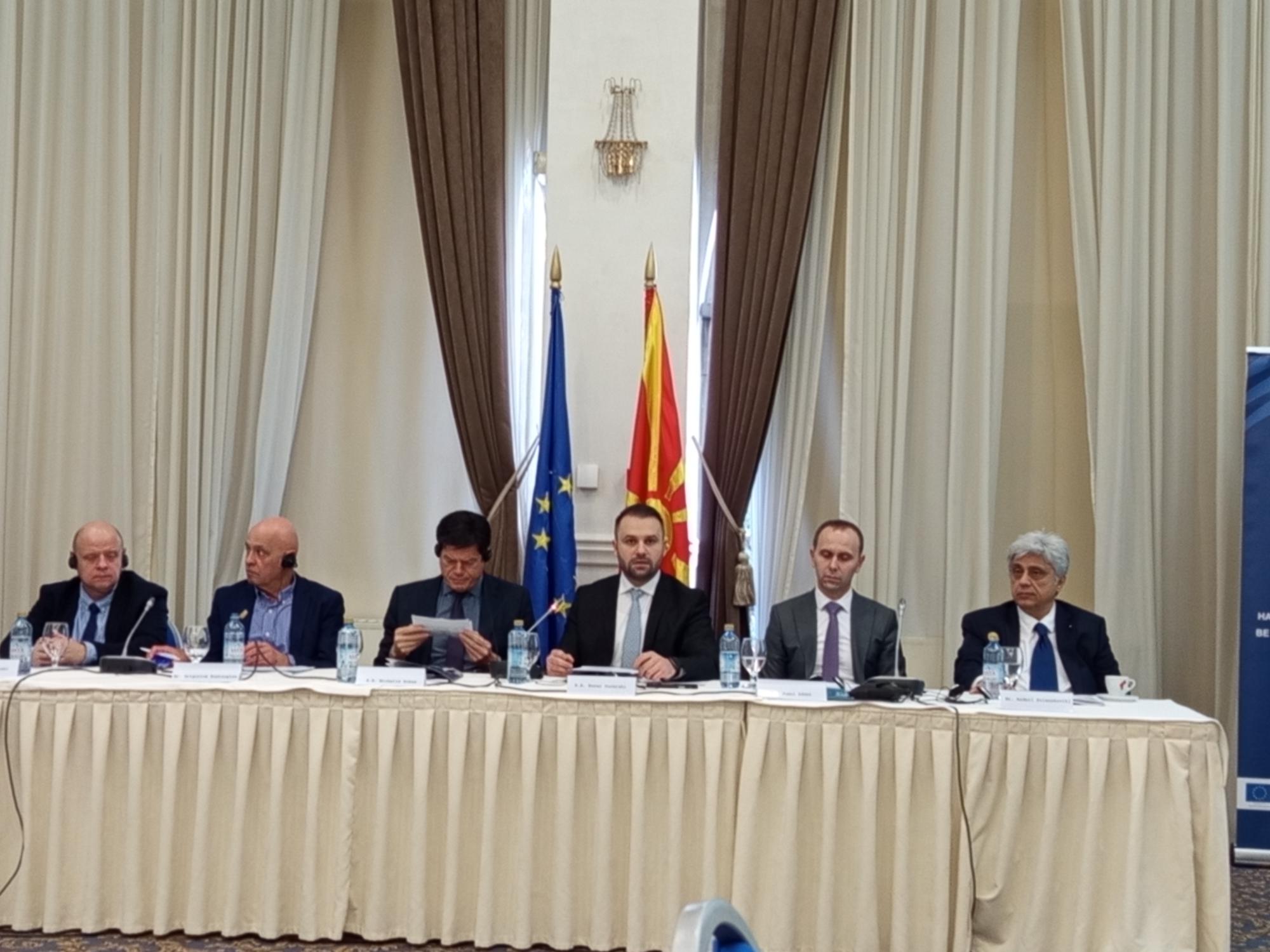
A presentation of the Republic of North Macedonia’s Small and Medium-Sized Enterprises Strategy 2025–2030 was held at the Aleksandar Palace Hotel in Skopje. The event was organized by the EU for the Development of Small and Medium-Sized Enterprises project, funded by the European Union, in cooperation with the Ministry of Economy and Labor.
The event opened with a welcoming address by Mr. Besar Durmishi, Minister of Economy and Labor, who highlighted the Government’s strong commitment to the SME sector, the Strategy’s vision for sustainable economic growth, and its alignment with national economic objectives.
This was followed by an address from H.E. Michalis Rokas, Ambassador of the European Union, who emphasized the EU’s continued financial and technical support for SME development through the Growth Plan and the IPA III funds. The Ambassador also underscored the importance of alignment with EU standards and the shared goal of gradually integrating the country into the EU single market.
The event gathered members of the working group, as well as representatives of institutions, the business community, and other relevant stakeholders. The presentation covered the key strategic priorities, measures, and activities outlined in the Strategy, as well as the Action Plan for the 2025–2030 period.
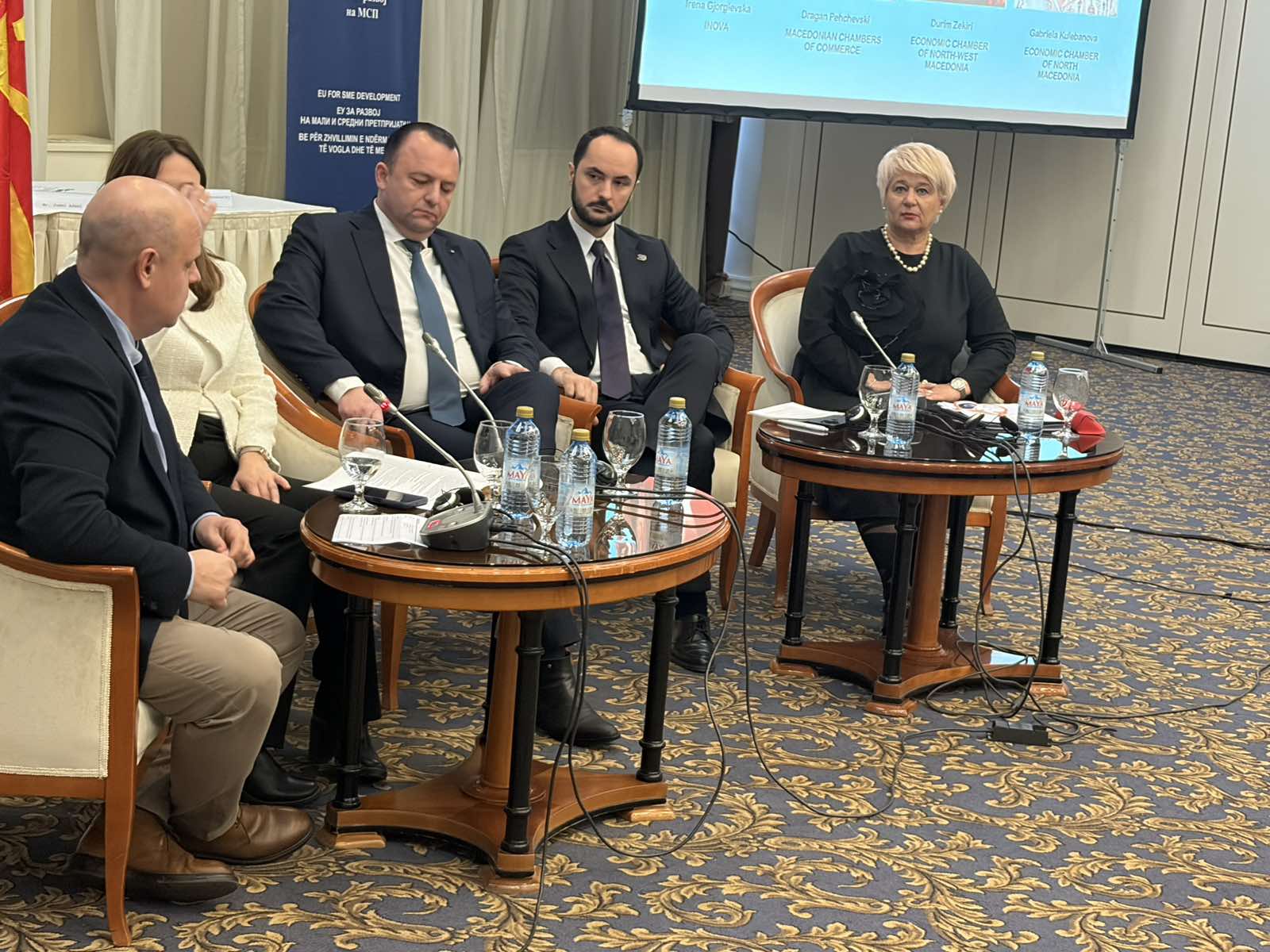
After the presentation, a moderated discussion was held with key stakeholders, including representatives from chambers of commerce, INOVA, and other organizations providing support to small and medium-sized enterprises and entrepreneurs. The discussion focused on the practical aspects of SME support, opportunities for improving the business environment, and strengthening institutional cooperation.
During the panel discussion, Gabriela Kulebanova, President of the MSME Center at the Economic Chamber of North Macedonia, elaborated on the practical application of the activities from the Action Plan. She stressed that the implementation of the Strategy is a key factor in achieving the planned economic effects and aligning with the EU SME Strategy and the principles of the Small Business Act.
Although the strategic framework is broadly aligned with EU policies, Kulebanova pointed out that the main risks relate to practical implementation. She identified institutional fragmentation, limited administrative capacity, unpredictable financing, a high administrative burden on SMEs, and an underdeveloped monitoring and evaluation system as the key challenges. To overcome these obstacles, the Strategy recommends establishing a clear coordination mechanism with a single lead institution, ensuring multiannual and sustainable funding for measures, simplifying and digitalizing administrative procedures, and systematically strengthening institutional capacities. A special emphasis is placed on establishing an efficient monitoring and evaluation system, based on clearly defined indicators and regular public reporting.
The event enabled constructive exchange of views and recommendations aimed at strengthening the implementation of the Strategy and improving the ecosystem for small and medium-sized enterprises in the Republic of North Macedonia.



 Прогресив Академија