„Dimitrie Cupovski“ 13, 1000 Skopje +38923244000 ic@mchamber.mk
„Dimitrie Cupovski“ 13, 1000 Skopje +38923244000 ic@mchamber.mk
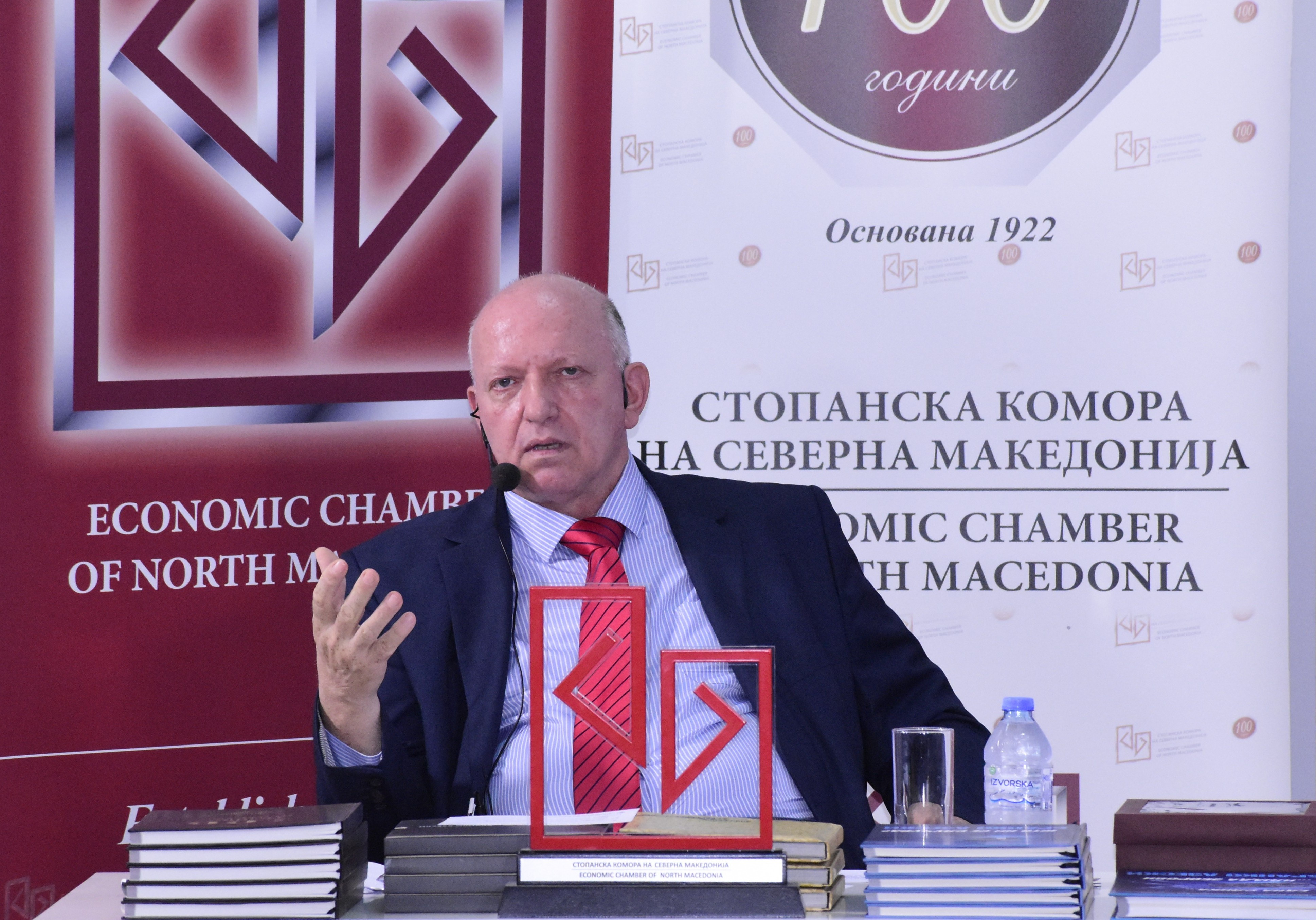
This is what my agenda looks like for the coming week, to be complemented by online participation in an international conference in Tirana, where I will promote the idea of building transport-logistics centers in Kichevo and Durres — an initiative first presented in 2013. The EU-funded Study prepared at that time concluded that this solution is more efficient than constructing a new railway line between Kichevo and Durres. From this agenda, it is clear that our current focus is to support companies that generate growth and added value.
1. Why do you identify investments as such an important factor?
There can be no economic development without economic infrastructure, which directly affects business opportunities and the overall attractiveness of the country for work and investment. Infrastructure projects are among the primary drivers of the construction sector, which is why we encourage the Government to continue investing decisively in key transport and energy infrastructure projects that also create new jobs. The business community insists that domestic companies participate in public projects as well, which would stimulate their growth capacities, position them as main contractors in capital projects in the country, and enhance their ability to innovate and create new economic value.
The economy would perform better if infrastructure projects were completed within the planned timelines and dynamics. Otherwise, responsibility must be assumed for delays or failure to carry out projects that are crucial to the Macedonian economy — projects for which businesses have waited far too long to see finalized.
2. Businesses talk about investments, but employees talk about salaries. The Government says that employers and workers should agree on the minimum salary, although an Economic and Social Council exists, where the Government is the third partner.
As someone who leads companies and communicates daily with managers and owners, I have repeatedly stated that I support salaries and income aligned with employee performance. Chamber analyses and insights from our members confirm that salary growth must result from increased labor productivity. Any imposed salary increase leads to higher costs for companies and reduced competitiveness. Within a market economy — which Macedonia aspires to be — the price of labor should be determined through agreement, not administrative decisions.
The market is the most realistic and objective evaluator of labor value. Otherwise, such a model of minimum salary growth would create a spiral of price increases for essential goods and services, negatively affecting both companies and end consumers.
3. You often mention the competitiveness of the Macedonian economy in relation to exports, but another key issue you continuously highlight is digitalization. How can this process help companies?
Digitalization is not a matter of choice; it is a prerequisite for functioning in a technologically advanced world. It enables the creation of products and services with high added value and has a multiplier effect on GDP growth. However, for businesses and the broader economy to function effectively in a digitalized environment, several steps are required:
I. The public sector must implement a unified systemic solution rather than fragmented and uncoordinated digital projects. The focus should be on efficiency, transparency, and eliminating bureaucracy. This approach would reduce costs, prevent multiple payments to different institutions for the same activity, and save time — which is critical for companies.
II. The private sector must move toward large-scale digitalization of processes, including the establishment of mobile payment infrastructure and decisive measures to reduce the informal economy through the implementation of certified e-commerce platforms. Such platforms would build public trust, offer lower prices, and increase transaction volumes. By standardizing digital trade tools, Macedonian companies would be able to move beyond local boundaries and integrate directly into the single EU market in a fast, secure, and efficient manner.
4. Do you have a solution for overcoming these development obstacles and enabling Macedonia to achieve GDP growth of 4 to 6 percent, so that, as you say, the economic benefits can truly be felt?
I do. The solution lies in restoring the principle of responsibility, which lies buried since 1992. Responsibility must return as a fundamental principle of the state in which we live. Just as every stable house stands on four pillars, so must our economy: education aligned with business needs, increased exports, regional cooperation, and responsibility. If consensus is built around these four pillars among all actors in economic policy, then we can say we have taken a meaningful step forward.
5. What are the current relations between the public and private sectors?
It is important to note the relationship of this Government toward the business community over the past ten years, including the period when it was in opposition. In particular, the approach of the leader of VMRO-DPMNE and current Prime Minister, whose conduct toward business associations and companies serves as an example of how these relations should function. To be clear, we will criticize the Government for any action that contradicts the fundamental principles of the rule of law and the market economy — but only if we have a better solution to offer, not criticism for its own sake. That is what constitutes a healthy relationship between the private and public sectors.





 Progressive Academy