„Dimitrie Cupovski“ 13, 1000 Skopje +38923244000 ic@mchamber.mk
„Dimitrie Cupovski“ 13, 1000 Skopje +38923244000 ic@mchamber.mk
.jpg)
In recent days, Bitola hosted several significant events dedicated to international cooperation with the Kingdom of Sweden, sustainable development, and the just energy transition of the Pelagonija region.
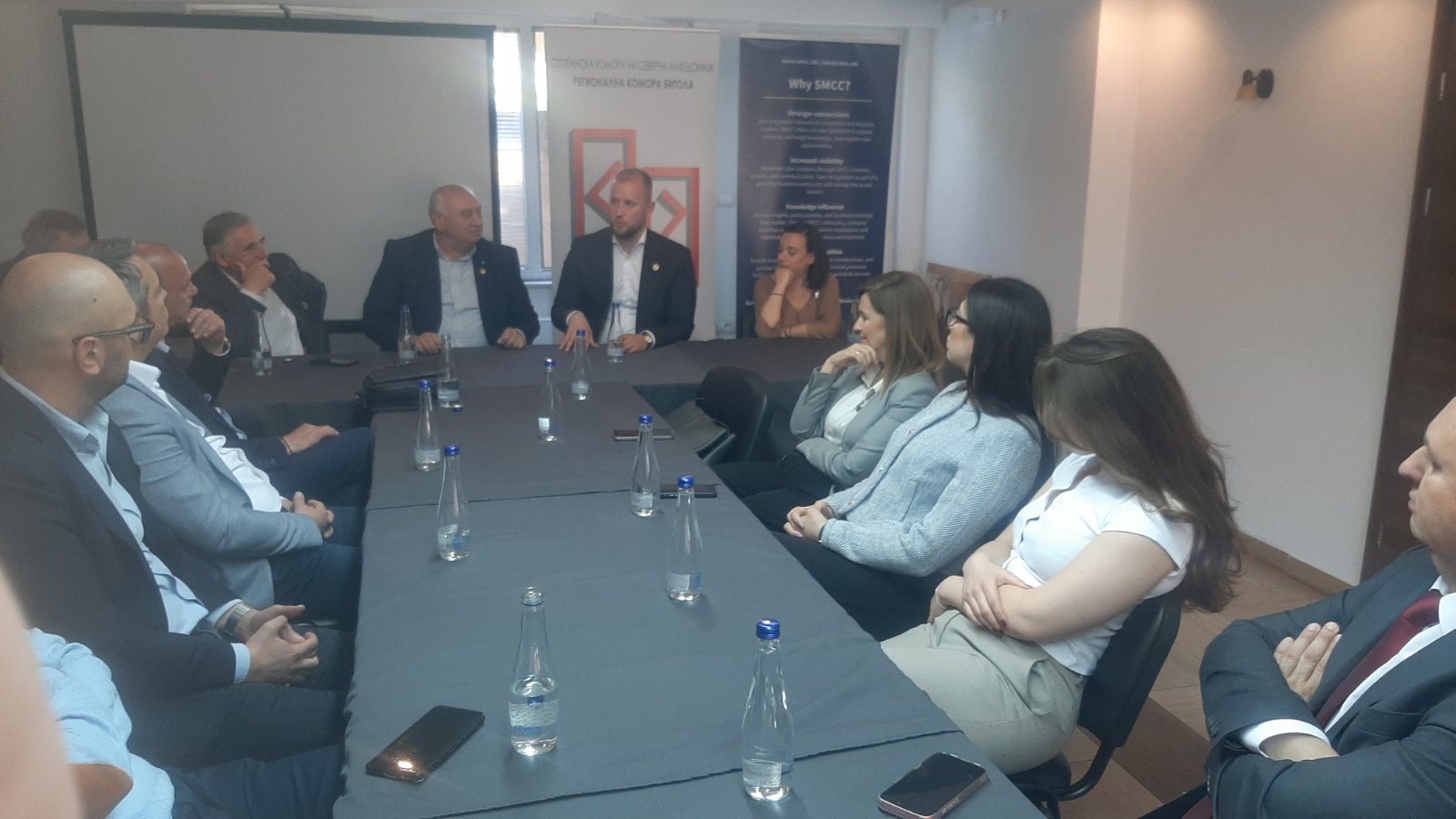
On 5 May 2026, a meeting was held between the Regional Chamber based in Bitola, operating within the Economic Chamber of North Macedonia, and the newly established Swedish-Macedonian Chamber of Commerce, attended by representatives of both chambers. Discussions focused on enhancing economic cooperation, opportunities for new investments, connecting companies, and developing partnerships between the business communities of the two countries.
In his address, the President of the Bitola-based Regional Chamber, Mirko Velkovski, stated that the current trade with Sweden, amounting to around €90 million, is satisfactory, but that there is significant potential for growth, especially due to the large Macedonian diaspora in Sweden, most of whom originate from this region.
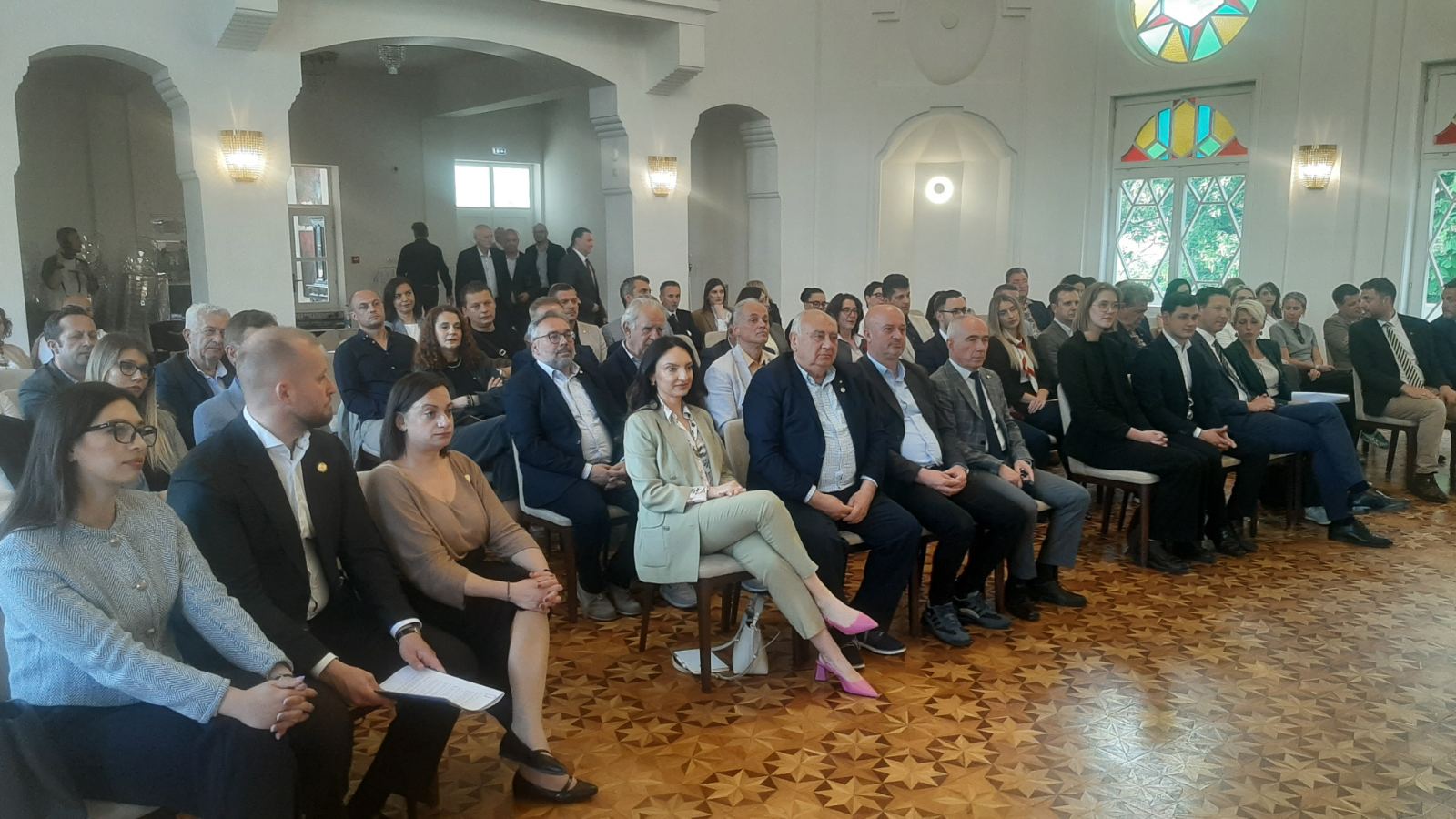
On the same day, an event titled “Sustainable Partnership” was held, organized by the Swedish-Macedonian Chamber of Commerce, Rotary Club “Shirok Sokak,” the Swedish Alumni Network, and the Embassy of the Kingdom of Sweden in Skopje.
The event was attended by numerous representatives from the business community, civil society sector, and local self-government, including the Mayor of the Municipality of Bitola, Toni Konjanovski, the Mayor of the Municipality of Novaci, Stevche Stevanovski, and His Excellency Ola Sohlström, Ambassador of the Kingdom of Sweden in Skopje.
The event opened important discussions related to sustainable investments, local development, and opportunities for deepening Macedonian-Swedish cooperation.
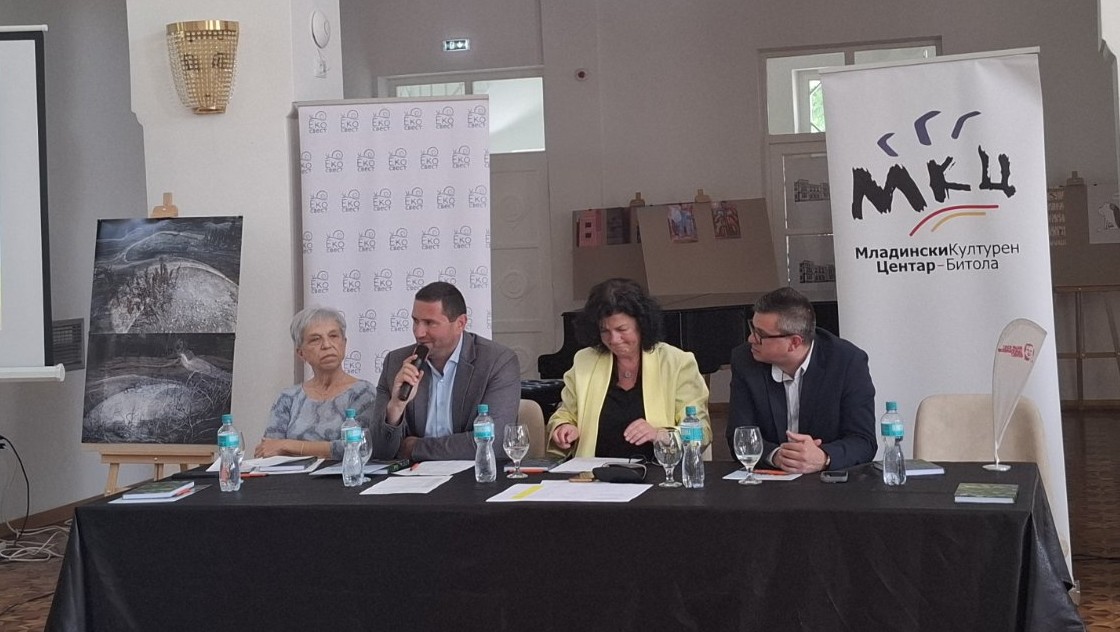
On 6 May 2026, the National Networking Event of the Local Economic and Social Councils (LESCs), titled “Just Energy Transition in Pelagonija – New Skills, Innovation and Sustainable Economic Development,” was also held. The event was organized by the Youth Cultural Center (MKC) Bitola and Eco-Svest from Skopje, in cooperation with the Local Economic and Social Council of the Municipality of Bitola.
One of the panel speakers was Nikola Dimkovski, MSc, an expert from the Regional Chamber based in Bitola, who addressed the role of the business sector in the just transition process. He emphasized that the business sector is directly involved through participation in regional development teams, as well as through the implementation of green investments and the creation of green jobs.
Dimkovski noted that among the most relevant indicators for monitoring the progress of the just transition are the indicators related to the number of implemented renewable energy sources (RES) and newly created green jobs, as well as indicators linked to finance, processes, learning, and beneficiaries. Additionally, he stressed the importance of monitoring and evaluation mechanisms for strategies, productivity measurement, green investments, and environmental performance.
Regarding priorities for 2027, Dimkovski emphasized the need for stronger support for green investments through grants and co-financing, support for RES, energy efficiency, and the circular economy, as well as the encouragement of public-private partnerships, development of green skills, and innovation.
The event sent a strong message about the need for constructive dialogue and joint action among institutions, local self-government, the business sector, trade unions, educational institutions, and civil society organizations, with the goal of creating a sustainable and competitive future for the Pelagonija region.





 Progressive Academy